V&S MEDICAL
The treatment of facial and neck small vessels at the Vein and Skin Clinic.
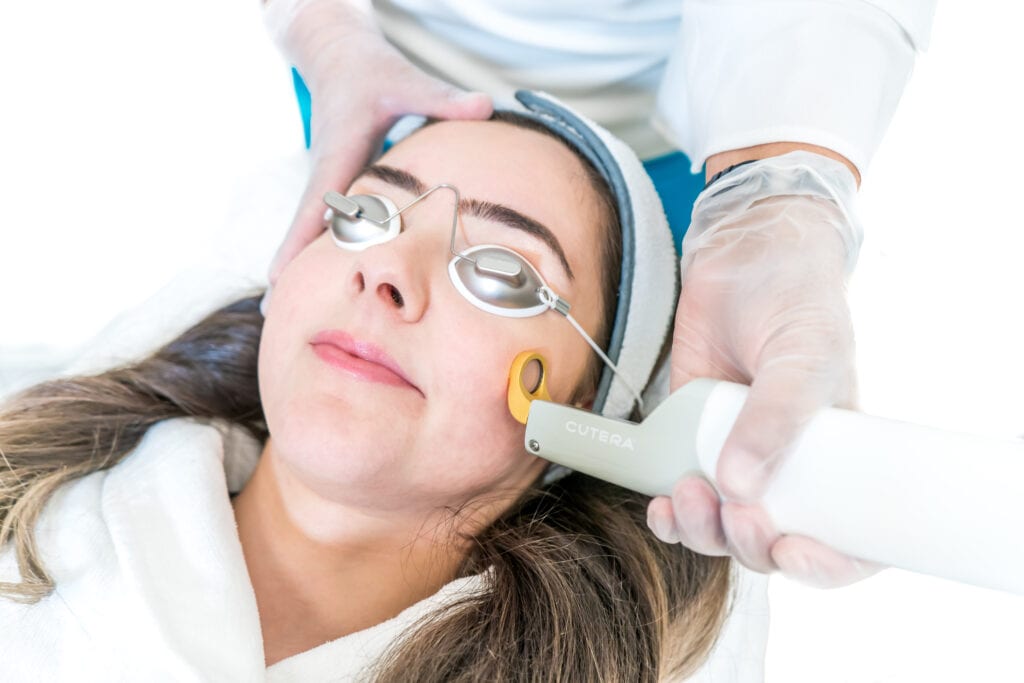
IPL (intense pulsed light) and vascular lasers use light energy to destroy spider veins. This is an alternative to microsclerotherapy. IPL is very effective on tiny spider veins, blush areas, spider naevi and poikiloderma of civatte (tiny red vessels and pigmentation changes of the neck and upper decolletage area).
The Vein and Skin Clinic uses the state of the art Lumenis 1One platform which integrates two highly effective technologies to treat leg veins, spider veins and benign vascular lesions.
The versatility of IPL at a range of 515 to 1200nm (nano metres) for reaching the small and superficial red vessels and high energy pulsed laser light at 1064nm to treat deeper blue veins.
Laser treatment causes the reticular and spider veins to seal and close off. An additional benefit is that the long wave length laser energy easily passes through the melanin barrier of the skin surface and doesn’t interfere with pigment, enabling successful treatment of any skin type and at any time during the year. There is only minor discomfort to the patient, no down time and no compression hosiery needed. Usually a few sessions are required for maximum benefit.
The Lumenins 1One multi application platform can successfully treat a broad range of vascular conditions such as rosacea, port wine stains (birth marks), hemangiomas (blood blisters), vascular lesions as well as the reticular and spider veins.
A. The combined light sources on the Lumenis 1One platform: IPL (Intense Pulsed Light) and Nd:YAG 1064 laser offer some important benefits over injection sclerotherapy. The combination of IPL and Nd:YAG therapy allows treatment of injectable leg veins as well as matting and small spider vessels that may be too small to inject. In addition laser/light therapy is rapid, perhaps less painful and minimally invasive without the use of needles. It also typically does not require compression hosiery.
These are usually minimal and of a limited nature. The majority will settle with time.
To book a consultation and let us help you achieve your goals, get in touch with our team.
Contact us through our enquiry form, call Vein & Skin Clinic on 0800 639 968, or book your appointment online.
The cost of this procedure varies according to the areas that require treatment and whether the area is treated alone or in conjunction with other areas. (This is most common).
Please ring 06 757 2972 to make an appointment for varicose vein treatment at Whanganui or Taupō.